Two Very Special Behind-the-Scenes Mountain Movers

July 10, 2019

It is with the highest honor that College of Adaptive Arts introduces to you two integral Mountain Movers that work tirelessly behind the scenes to grow this innovative collegiate model: Richard Hermerding and Bobbi Tafoya.


Richard joined CAA in 2014 as their part-time CFO. He helped get all finances streamlined into Quickbooks and helped guide the organization to use monthly financial statements to grow strategically and prudently. He was the first to catch that CAA’s information had been compromised during the big Target breach many years ago. He has helped ensure we all know about depreciation and journal entries of logging gift cards. He attends each board meeting and has been a steadfast rock of strategic guidance and oversight. Since Richard has joined the Mountain Movers leadership team, CAA’s operational budget has more than doubled, and striving for financial health and sustainability is at the forefront of the Mountain Mover Leadership Team’s mindset.


Bobbi Tafoya is CAA’s monthly bookkeeper and Regional Center invoicing lead. She helps to code each and every transaction to the correct chart of account code, and she runs the monthly board reports in a timely and professional fashion. She is the one who also inputs attendance each month to the Regional Center portals for processing. She meticulously keeps track of how many units are left on each student’s Purchase of Service (POS), and she works professional with the Regional Centers to support the over 100+ students who now have their tuition covered each quarter by the Regional Centers.


These 2 CAA unsung heroes are gracious, professional, and diligently work behind the scenes to support and grow this innovative, lifelong collegiate model of education. They are both fully committed to helping to bring this model to full fruition so that it can replicate and sustain and being as robust and accessible to adults for education that Special Olympics provides for adults who want to keep participating in athletics.


These 2 leaders never ask for any credit, are never in the limelight, and are so very essential to the financial and procedural growth of College of Adaptive Arts. To Richard Hermerding & Bobbi Tafoya, College of Adaptive Arts Salutes and Honors you today and everyday as true Movers of the Mountain to illuminating and cultivating the authentic abilities of adult learners of all ages and abilities.
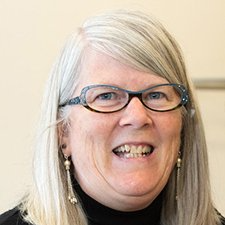
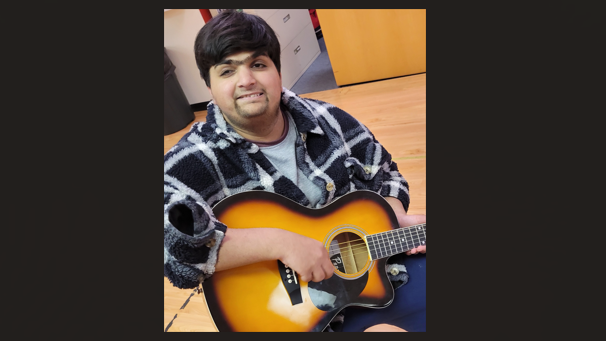
Bobbi Tafoya
By DeAnna Pursai December 31, 2025
2025 has been a pivotal, transformational year for @College of Adaptive Arts (CAA). The conversations we’re having across the community continue to affirm that we are on the right track in advancing an expanded, adaptive higher education model—one we believe can scale nationwide and beyond. We hear it constantly: “Wouldn’t it be nice to have this model in my community? ” If we had a dollar for every time someone said that, we’d be much further along in realizing our vision of lifelong learning for all. CAA fills a critical gap in access to authentic, lifelong learning opportunities for adults with intellectual and developmental disabilities (IDD). Across the country, momentum is growing for inclusive collegiate partnerships and postsecondary programs. These efforts are phenomenal and exciting—but many are limited to a traditional four-year, post–high school timeframe, often ending around age 22. For adults with IDD, disability accommodations at typical colleges and universities (such as extended time, test readers, note takers, or separate testing spaces) may not be sufficient or appropriate. When those supports don’t meet their needs, educational options become narrow and limited. That’s the gap CAA is designed to bridge. CAA is a lifelong learning model. Credits are earned through exposure to instructional concepts. Undergraduate and graduate diplomas are awarded based on hours of participation. After receiving a diploma, students are welcomed and encouraged to re-enroll and continue learning at their own pace, for as long as they wish. Some students take just one class that sparks their curiosity; others enroll in multiple courses. Some explore a subject for a semester or two, then pivot to a different area. Many students value our online-only option due to medical complexities or limited transportation, while others prefer in-person learning. This flexibility is a key reason we envision this model embedded on college campuses nationwide. Our graduate students can enroll in our workforce development program, which offers adults with IDD paid apprenticeship positions where they can gain meaningful, practical workforce skills. We see CAA as a flexible, scalable model of lifelong learning that communities across the country can adopt—much like the way Special Olympics has transformed access and inclusion in athletics, CAA aims to do so in higher education. To measure impact, we focus on improvements in: Quality of Life Hope Confidence Connections & Friendships Pathways to Contribution These indicators remain consistently high—not only for CAA students, but also for faculty, staff, parents, and care providers. This adaptive, lifelong learning model benefits: Adults with IDD who are eager and hungry to learn. Adults seeking meaningful, part-time or gig-based employment in a dynamic, supportive environment. Parents and care providers—one parent shared, “I can finally sleep at night.” Communities, which begin to see adults with disabilities in a new light, recognizing their talents, skills, and contributions. We are deeply grateful to the many community partners who have leaned in this past year to share their resources, insights, and wisdom, including: @Greenbrier, @SASCC, @StateSenatorCortese, @JoeSimitian, @PamFoley, @Visa, @GoldenStateWarriors, @CDSA, @Arm, Inc., @SaratogaSprings, @BlueOakNx, @WestValleyCollege, @LaneyCollege, @Profound, @BlindInstituteofTechnology, @Hiline, @ImpactPro, @MissionCollege, @SamLiccardo, @OpenAIPeopleFirst, @TEDxViikki, @CynthiaGregory, @AssociationofHigherEducationandDisability, @AmericanAssociationforIntellectualandDevelopmentalDisability, @Brainshare, @OnlineAssistantPro, @SanAndreasRegionalCenter, @CADepartmentofDevelopmentalServices, @CaliforniaAssociationofPostsecondaryEducationandDisability, @ForbesNonprofitCouncil, @SheriJayCoaching, and @HummingbirdStudio. The groundswell of support for this lifelong higher learning model is palpable. Onwards and upwards for eager and hungry lifelong learners.
By Michael Reisman September 24, 2025
State Senator Dave Cortese shares his support & rationale for supporting this lifelong, adaptive equitable education model for workforce development & scaling and replication.
By Michael Reisman February 10, 2025
Disability Advocate Haben Girma to Speak at West Valley College February 12 (Saratoga, Calif., January 22, 2025) Haben Girma, nationally recognized disability rights advocate and the first deafblind graduate of Harvard Law, will be coming to the Bay Area for a free Assistive Technology Fair which will feature a special talk, book signing, and campus tours. Girma is a Bay Area native and a human rights lawyer advancing disability justice. President Obama named her a White House Champion of Change, and the World Health Organization appointed her Commissioner of Social Connection. She has also received the Helen Keller Achievement Award, a spot on the Forbes 30 Under 30 list, and TIME100 Talks. Harnessing the power of the written word to spark advocacy, Girma wrote and published the book that became a bestseller, Haben: The Deafblind Woman Who Conquered Harvard Law. The story takes readers on adventures around the world, including her parents’ homes in Eritrea and Ethiopia, building a school under the scorching Saharan sun, training with a guide dog in New Jersey, climbing an iceberg in Alaska, fighting for blind readers at a courthouse in Vermont, and working with President Biden and President Obama at The White House. College of Adaptive Arts, a non-profit college serving over 250 adults with Intellectual and Developmental Disabilities (IDD), is sponsoring the event along with West Valley College’s DESP services, David Wang Educational Endowment and EOPS in an effort to provide information and programs to those experiencing disability. “Haben Girma is a great example of how to transform perceptions of people with disabilities,” said Nicole Kim, Executive Director of College of Adaptive Arts (CAA). “Like many of our students with IDD, she’s had challenges to overcome, but being able to access higher education was instrumental to her growth and success. She is a great example of the change one person can affect if just given the opportunity.” The event is free to the public and takes place Wednesday, February 12 from 10am-2pm at West Valley College’s Campus Center at 14000 Fruitvale Avenue in Saratoga, CA. For additional information, or to RSVP, please visit www.bit.ly/wvc-atf2025

Subscribe to our mailing list

Are you a current family looking for Weekly Updates? Sign into the student portal or subscribe to our weekly email list.
Subscribe

Share