
CAA Blog

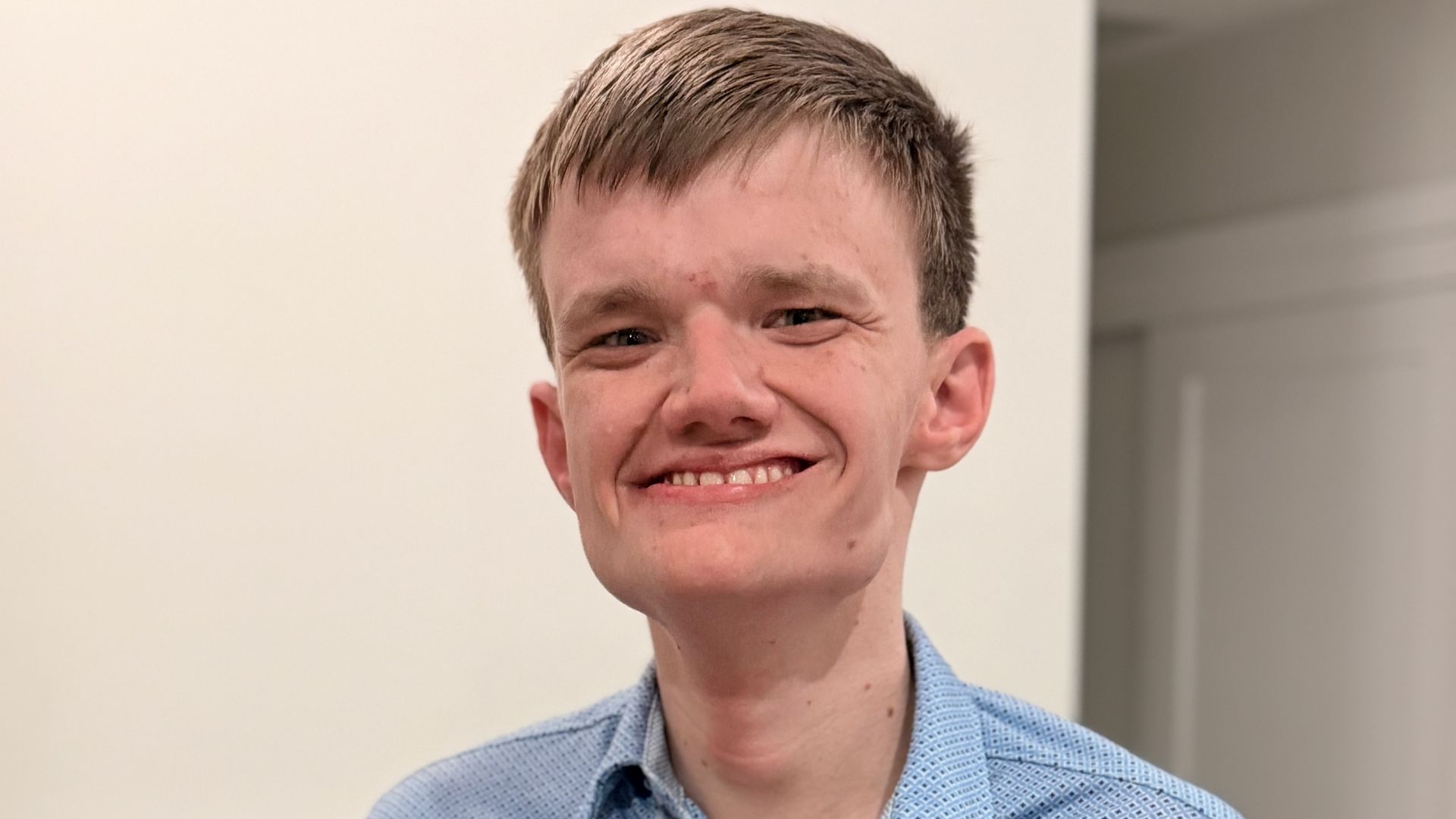
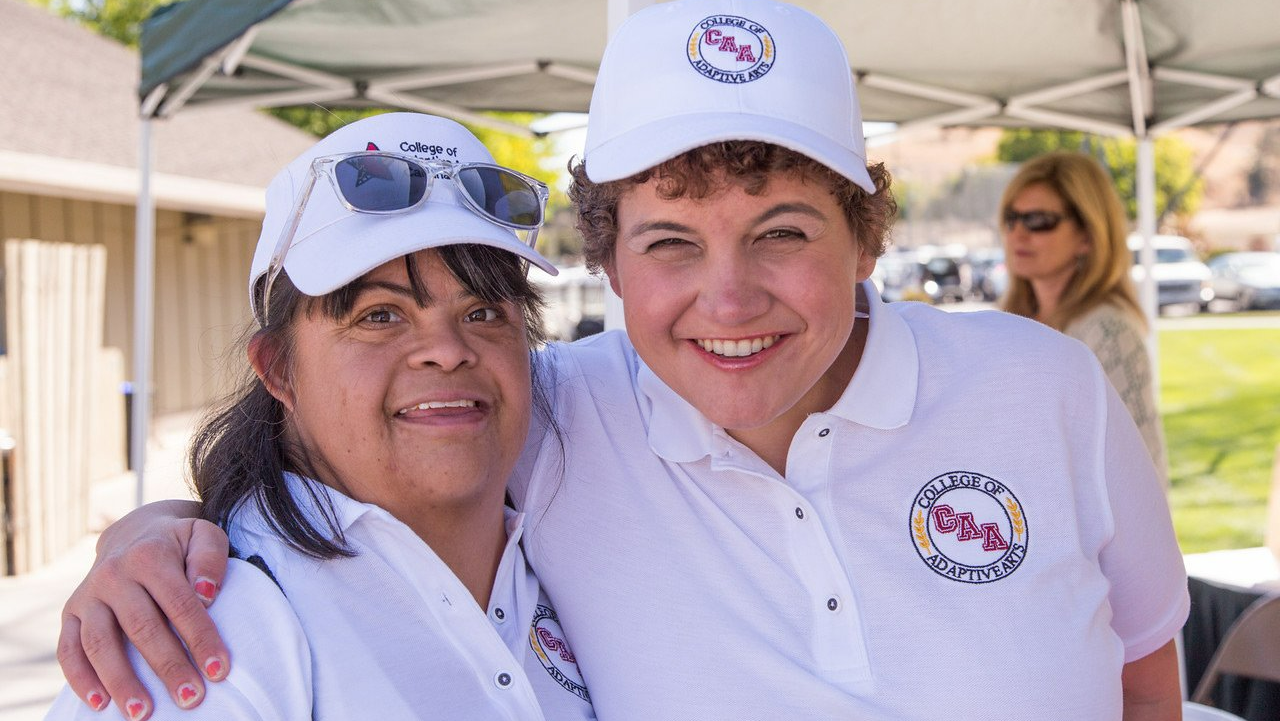
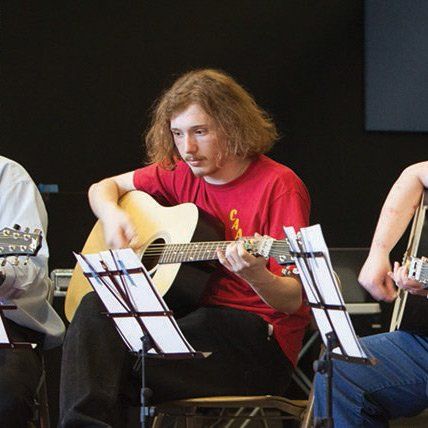
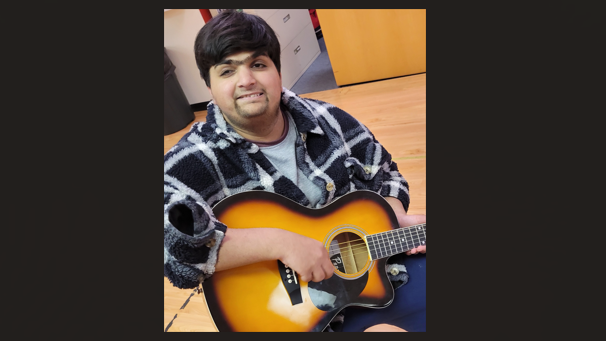
When Ann Lunt was recovering from foot surgery two years ago, she came across a story about CAA on Channel 7’s “Localish” TV show and she immediately knew it was a place where she belonged. “I love CAA,” Ann said. “Everyone is really friendly and the teachers understand us.” Ann has lived on her own for 20 years and navigates to and from campus by herself. In 2002, she went deaf but was able to get a cochlear implant in 2003 which now helps her hear, however the hearing loss still affects her speech. Despite that, or maybe because of it, Ann’s favorite thing is singing and music. Some of the CAA classes which she enjoys are Adaptive Guitar, Choir, and Music Appreciation. One of her goals is to get into the Songwriting class and learn how to write a song. At age 57, Ann is proof that you never stop learning and growing. “In this world, we need to learn as much as we can,” Ann said. Ann is extremely compassionate and had the idea during Compassion Week to make video messages for foster youth. Growing up in group homes for nearly 15 years, Ann could relate to those experiencing the foster care system and wanted to reach out to them. One of the things Ann loves most about CAA is socializing and making friends. “I’m proud that I have friends who I can talk to,” Ann said. “We have each other’s backs and all root for one another.” Ann is excited to continue her learning journey and hopes that one day she might become an Associate Professor at CAA.

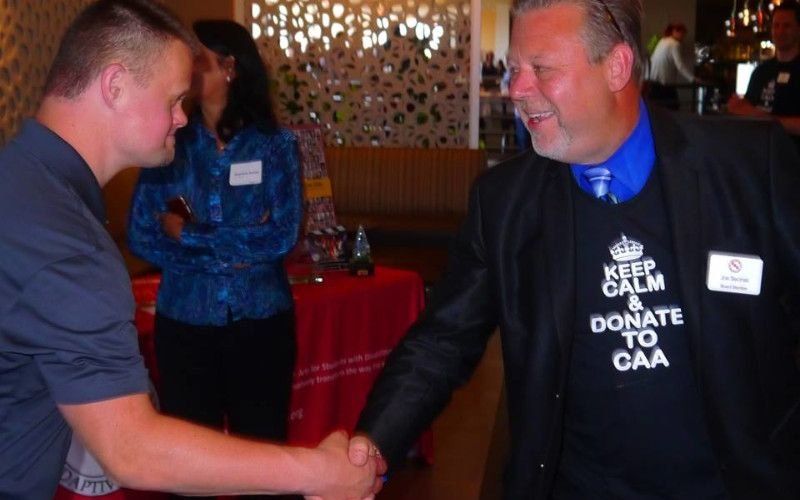
This is a blog post that is most unexpected and heart-wrenching for our College of Adaptive Arts Mountain Movers community. This past week we lost one of our truest and long-standing Mountain Mover board members, Mr. Joseph Siecinski. Joe walked into our small, rented space at Randol School in 2010. He was in a full suit and tie (which we later would learn that he wore everyday). He politely introduced himself to Dr. Pam and DeAnna. De and Pam were teaching about 90% of the classes at this time, and we may have had about 30 adult students. He asked what was College of Adaptive Arts, and when we explained that we were creating an adaptive collegiate experience for adults with intellectual and developmental disabilities, he did not blink and eye, and said, “How can I help?” To say that there would not be a College of Adaptive Arts without Joe Siecinski would truly not be an understatement. He quickly joined our board, giving guidance and financial and business support with all of his heart and soul. He helped us to write our very first business plan, which as we look back on now, we achieved within the first 10 years of operation. He formally left the board in 2021 after 8 years of formal service. He stayed on to this day for our regular board meetings, executive board meetings, and monthly financial meetings. He believed in this model through thick and then when it seemed sooooo difficult and tempting to give up. Joe never did. Joe was a most magnanimous, kind, and larger-than-life figure. He *always* told the truth and never glossed over any hard financial findings– but with kindness, integrity, and humility. Through his constant presence CAA has grown operationally that first year in 2009 closing the books at about $65k to closing at over $2million this past fiscal year on June 30, 2025 with another 2 million grant bestowed to us in 2023. When he commended the CAA team on their collective efforts, teamwork, and fiduciary stability this past year at a board meeting, it was a compliment that was genuine and tremendously valued and cherished coming from Mr. Joe. Joe would start any meeting he would attend with, “Happy Monday!!!!!!! or whatever day of the week it was. He made you feel like you were the most important person on Earth to him when he was with you. And his was so positive, knowledgeable, wise, and kind. He just exuded grace, integrity, and hope. Joe was the one who recommended that we read the book Traction by Gino Wickman back in 2019. CAA embraced the tenets and business principles of this book, and it’s been a transformative experience for our business execution. To this day, our staff huddles that we employ each Monday morning before school begins are called the Traction Huddles. Joe would always say that if CAA could bring in $1 for every $1 in tuition, we would be in a financially sustainable position. This is the year that we’re going to honor Joe and bring this sentiment into operational fruition. CAA has been operating in a structural deficit for a number of years now as the demand for our services has outpaced the one and only state funding code that did not pass the rate reform study. There’s significant community and policy momentum and traction to rectify this deficit, and our Q4 fundraising campaign is dedicated to Joe Siecinski. CAA will embrace his spirit and figure out a way to build a sustainable recurring model to reach adults worldwide who want to learn and grow and contribute at their own unique and individual pace. It’s happening, and we vow to keep going until this equitable, lifelong collegiate and workforce model is fully established in communities worldwide to be a beacon of Hope, Joy, Fulfillment, and Traction. This is our Salute to Joe Siecinski.

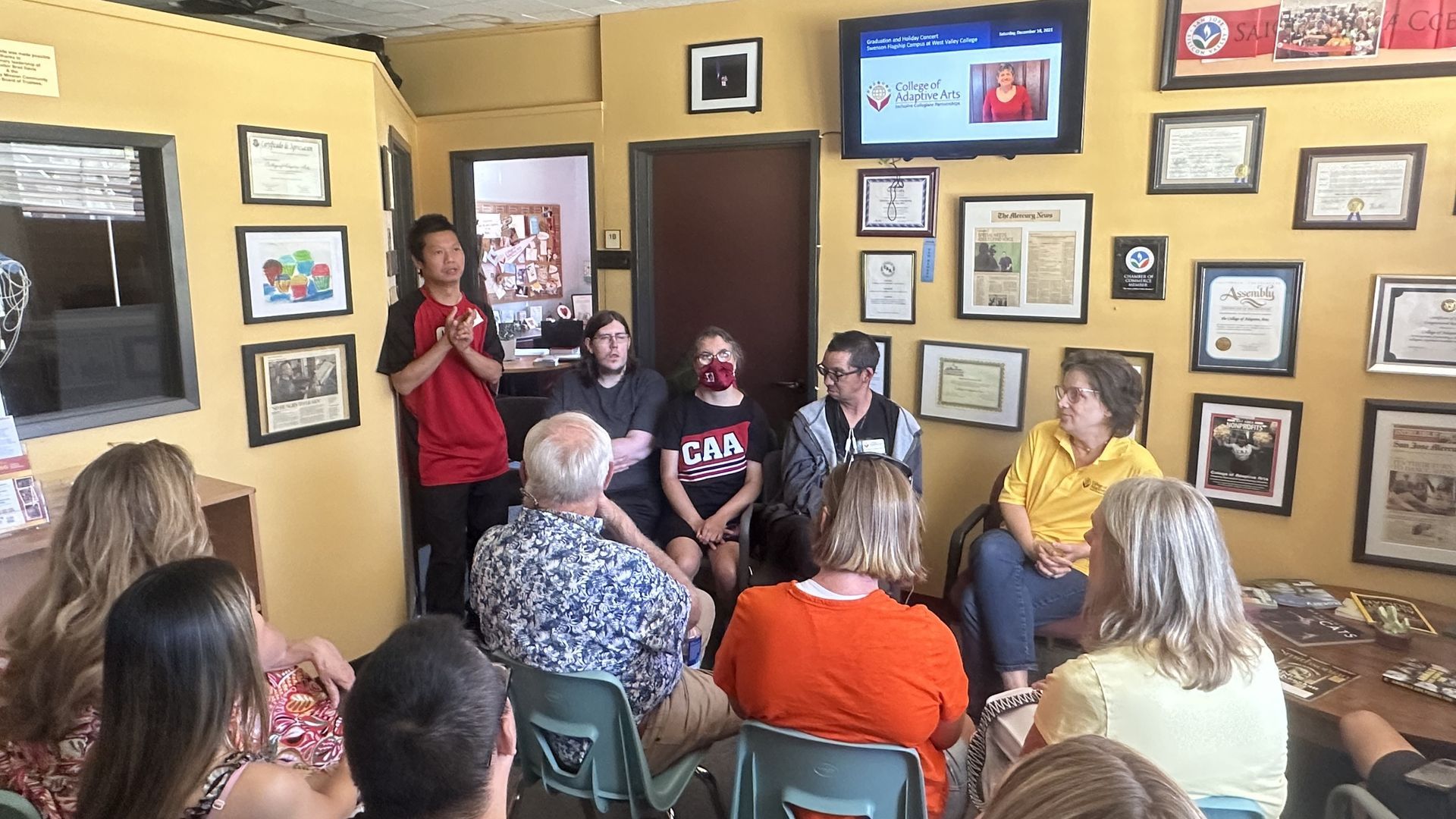
Sharon Lea has always had a love of music, but it wasn’t until joining CAA that she could actually meld both her passion and her career. Sharon obtained her degree in English from Chico State and worked most of her life in administrative roles. The companies she worked for made products like medical devices, and she always enjoyed customer service and helping people. After surviving a cancer diagnosis and losing her husband all within a three-year span, Sharon took time off work and began volunteering with CAA. That volunteer work quickly turned into a fulfilling career. CAA came into Sharon’s life at a time when she needed them, and when CAA needed instructors who had compassion and commitment to teach. “At CAA, you don’t need the degree but you need the heart,” said Sharon. Professor Sharon is the Director of Music at CAA and teaches many popular classes, including Concert Choir and Music Appreciation. In both those classes, she stresses to her students to find something that they like in the music and reminds them that it’s not about hitting all the right notes. “One of the reasons I love CAA is because I see the benefits of what I’m doing every day in the classroom,” said Sharon. When she was young, Sharon had to overcome a significant stutter so she can relate to the difficulties some of her students have with being heard and understood. Sharon says that she learns just as much from her students as they learn from her, and she loves coming away from classes hearing new perspectives and ideas. According to Professor Sharon, CAA is a unique place to work because the leadership puts people in positions where they can really thrive. “This has been such a wonderful growth experience for me,” said Professor Sharon. “I feel incredibly lucky to be a part of a supportive environment which celebrates caring and collaborative teamwork.”

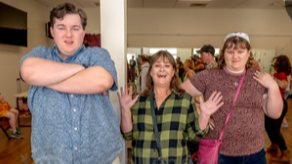
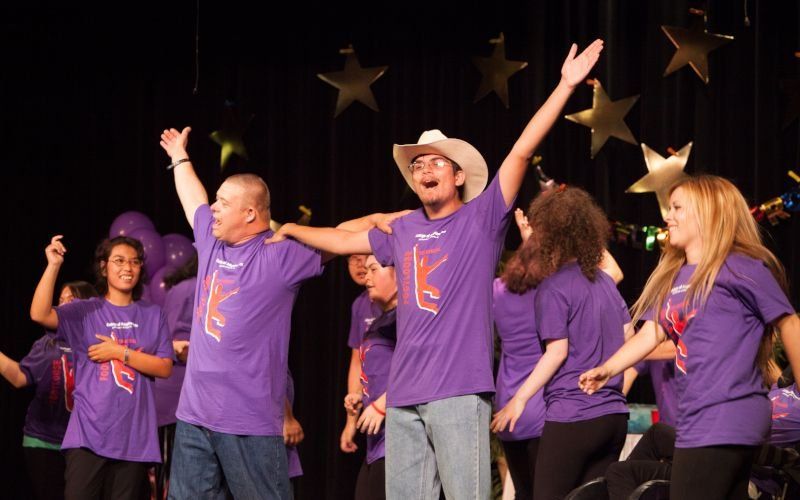
When Curtis Kitaji was first born, his family was told that he wouldn’t be able to speak. Fast forward many years later, and Curtis is one of the most prominent performers you’ll meet. In fact, his dream is actually to become an actor one day. Curtis takes acting and songwriting classes at CAA and recently was one of the emcees at the Celebration of Inclusive Partnerships Gala, where he received rave reviews. “Being at CAA has helped me come out of my shell,” Curtis said. “I love being on campus and being here with my friends.” CAA’s model for lifelong learning was highly beneficial for Curtis. He attended two other colleges before CAA but had trouble keeping up with the required pace and workload. There have been so many great memories Curtis said he had experienced as a student, and he remembers fondly when his acting teacher showed up to class dressed as a chicken for no reason. Curtis was a participant of CAA’s Cardinal Apprenticeship Program and has learned many new skills, both in class and in his on the job training, that will help him later as he explores new career opportunities. Curtis is a South Bay native and loves participating in various sports. He is part of the Special Olympics bowling team and also an integral part of the CAA golf team. When Curtis isn’t in class at CAA, he enjoys hanging out at the mall with his friends or listening to his favorite band, Pentatonix.

Longtime College of Adaptive Arts supporter and donor Erin Benford has been an integral part of the school since its inception. Erin has been a well-known realtor in the South Bay for nearly twenty years. She currently works for Christie’s International Real Estate Sereno, but prior to that she was a teacher, so she always had a passion for education. After meeting CAA co-founder DeAnna Pursai at a Silicon Valley Chamber of Commerce mixer, the two bonded over their shared similarities of being school teachers and having loved ones with disabilities. Erin’s son Joel had learning disabilities and was diagnosed with Asbergers Syndrome. He is high functioning, so he was able to work in various different jobs before eventually settling in as a valuable assistant at Erin’s real estate business. Working alongside Joel, Erin knew firsthand the importance of creating opportunities for a neurodiverse population. Aside from her family, her real estate business and philanthropy, one of Erin’s biggest passions is sewing. She is the president for the American Sewing Guild’s San Jose chapter which encompasses 5 different bay area counties. The guild is a community service organization and educational group, focusing on garment making, textile arts, quilts, machine embroidery and much more. Erin says she hopes more people will get involved and support organizations like CAA who have no federal funding. “Raindrops make oceans,” said Erin. “If everyone gave just a little, it could do so much.”

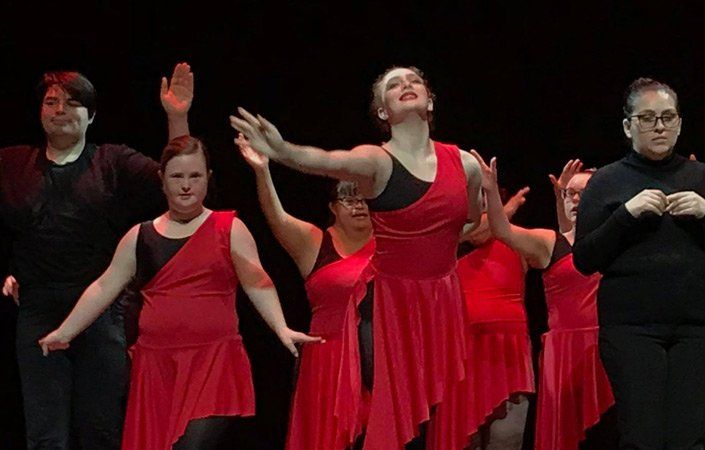
Kimberly was born in May 1978. She was a beautiful baby but something seemed off so testing was done and it was determined that she had Down syndrome. Testing also revealed she had a heart defect with a hole between chambers and a valve that didn’t work properly. This was all new to us. She was doing well so doctors decided to wait to let her grow bigger before doing heart surgery to repair the defects. We waited about 3 years and finally had open heart surgery at Stanford Children’s Hospital. The heart surgery went well but there was scaring below the vocal cords in her air way which required a Tracheostomy Tube below her vocal cords to allow outside air to & from her lungs. The Trach tube required suctioning to remove mucus from her airway and her lungs. But as Kim grew and made friends in the neighborhood and at early intervention school she learned she loved to dance and perform for the family and for an audience. She thrived when dancing in class, when practicing and when performing. She was a regular dancer at the Alice Porter Dance Studio in San Jose. She taught us, her parents, what she could do. We never said “you can’t” or “You won’t”. I would urge parents to use positive words when speaking to their children. She learned sign language to help communicating with others and her teacher. She learned to cover her trach with her finger to force air through her vocal cords to speak out loud. When teaching Kim how to ride a two wheeled bike she had difficulty with balancing. We tried everyday for a long period of time. We eventually found a three wheeled recumbent bicycle. She could ride that bike right away, and loved it. With her medical issues, we ended up with a trip to see a specialist in Salt Lake City, Utah and several trips to Cincinnati, Ohio. Dr. John Langdon Haydon Down (1828 – 1896) was a British physician well known for his work & description of the genetic condition “Down syndrome” which he originally classified in 1862. He is also known for his work in social medicine and as a pioneer in the care of mentally disabled patients. It is too bad he didn’t have a different last name or a different way to identify the syndrome. For many of our children there is so much more “Up” and not so much “Down”. Kim joined several dance classes and used sign language for the church choir. Once we discovered College of Adaptive Arts there were several classes Kim wanted to take part in. She loved her new friends and brought several existing friends to join her in classes. She thrived in dancing, acting, practicing and learning new things. She led practice sessions at various times in several classes. The College of Adaptive Arts has been a great resource for Kimberly and for us to help and enable Kim to learn, grow and thrive in many areas. She loved to perform in public and on stage. CAA offers many types of learning scenarios and learning environments. It can be good to consider which classes are available and join those that could turn out great for your child. The sky is the limit. The College of Adaptive Arts is a lifelong learning environment. Thank you to Pam and DeAnna for your vision and for your follow-through. Thank you to all the current leaders for their work and dedication. CAA has been a blessing to us in so many ways.
Weekly Updates
Are you a current family looking for Weekly Updates? Subscribe to our weekly email list.