A Riveting Parent Perspective

May 19, 2019

How do I begin to describe the wonder we named Kaleaha Marie Maldonado? We have been blessed to have her in our lives for 30 years. We were told average life expectancy of a Jacobsen Syndrome child was 2 years old. We were told this by a genetic counselor when she was 3 years old. That pretty much sums up the information from 1970 we had until Kaleaha was 5 years old.


Around this time, I learned of the human Genome Project: The main goals of the Human Genome Project were to provide a complete and accurate sequence of the 3 billion DNA base pairs that make up the human genome and to find all of the estimated 20,000 to 25,000 human genes.


How did this affect us? Thirty-five families from all over the USA agreed to meet at Southwestern University in Dallas Texas. It was going to be a costly trip, so we needed help. A wonderful radio show team called The Dog House the hosts JV (Jeff Vandergrift) and Elvis (Dan Lay) helped us out by doing a fundraiser. JV swan from Alcatraz Island to pier 39. JV did it! His team and listeners Raise enough money and got us to Dallas Texas.


We all met there, and that evolved into the 11Q R&R USA group. You can learn more about that by looking up 11qusa.org. That was the beginning of a parental community that help me navigate the rest of Kaleaha’s educational years. I learned about IEPs and different types of programs to request assistance for.


Kaleaha’s educational learning started with regional center programs like early intervention programs. She had to learn sign language at 1st since she couldn’t verbalize well until after age 3. She was having multiple ear infections, and it took until this age to get her treatment to remove fluid from behind her ears to allow her to hear our voices. Prior to this her hearing was as if she was underwater.


Kaleaha continued from 18 months all the way through 22 years old in the public education programs. After the age of 22 we had a few special day programs that we tried out for adults. This is where most of our difficulties began, we tried the various programs that would allow a 1:1 aid to assist Kaleaha. After trying the multitude of adult special day programs that were available in our area. I was pretty much ready to give up.


We switched Kaleaha to the Independent Living Skills program known as ILS. This worked out well for a little while a couple of years in fact. Then we ran into difficulty with staffing so now we started using different companies. We always ran into the same problem staffing. It was never consistent, and this seriously affected Kaleaha’s mental and cognitive abilities, severely triggering her negative autistic tendencies.


We were incorporating ABA Therapies at the same time as using the ILS services, so we were able to hunker down refocus and bring her out of the cycle. Then we started looking for new programming. With a referral we visited College of Adaptive Arts. We visited this campus. We were skeptical at first about its functionality with an individual who required a 1:1 aide.


Kaleaha’s ILS service provider thought it was worth a try she was very impressed with the progress she saw with her other clients. My fear held me back for a little bit, but I really wanted to get Kaleaha into a program that would provide her with more normalcy like she had throughout her previous educational years. I thought, “Well let’s give this a try.”


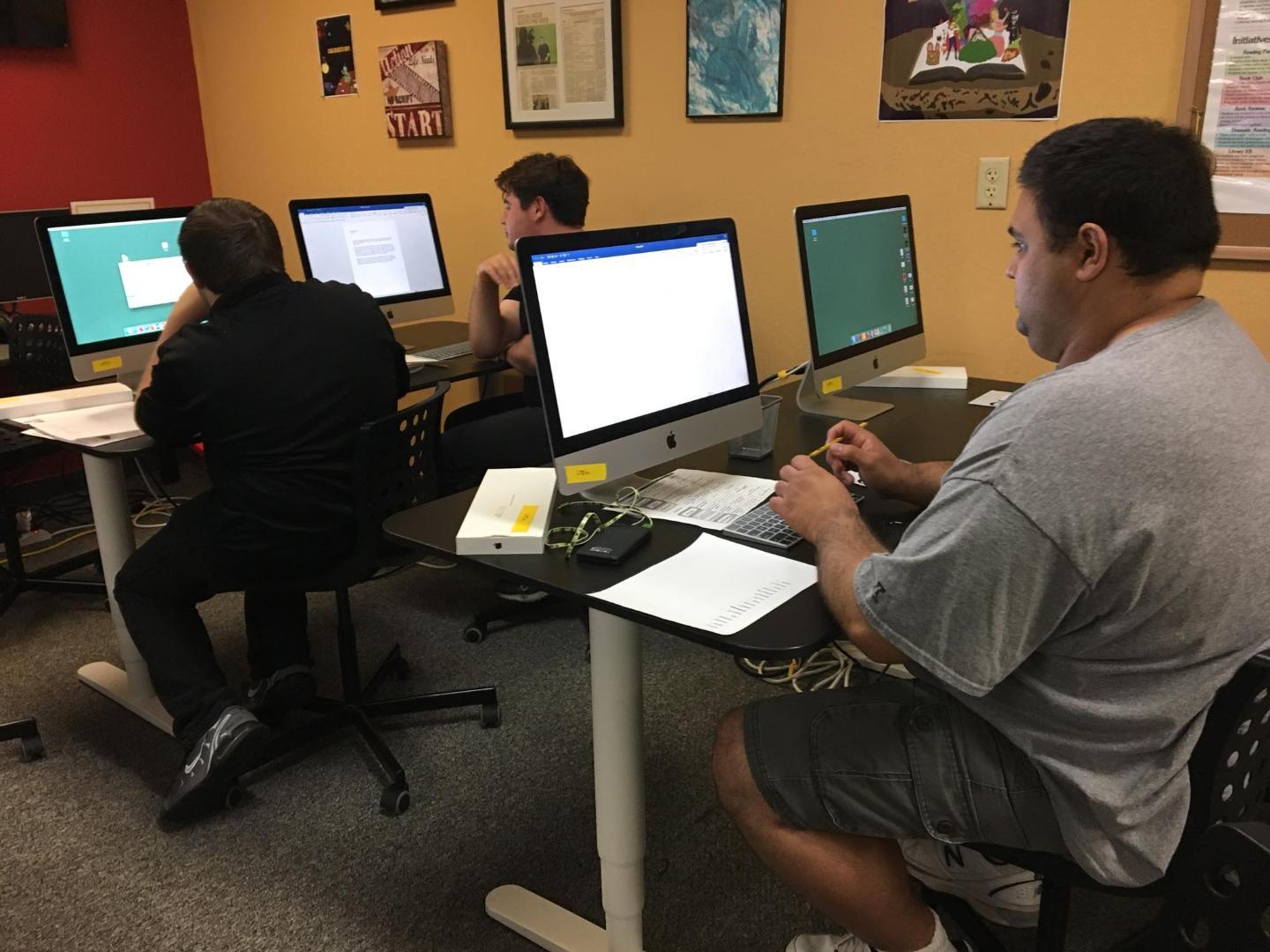
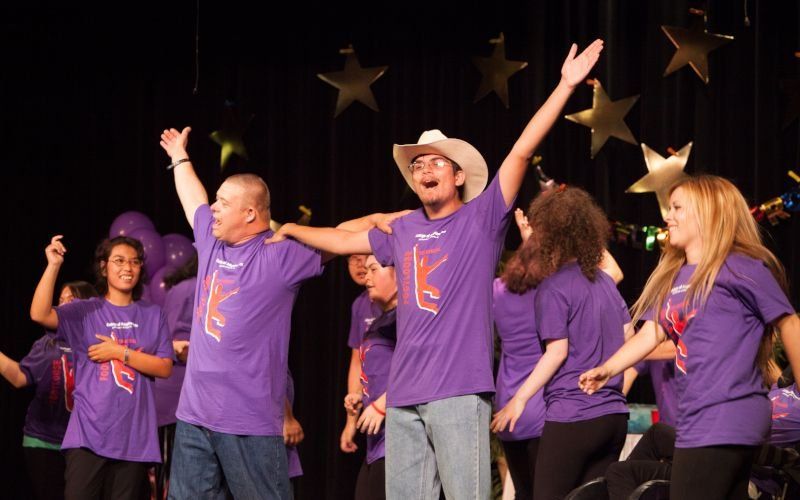
We selected some courses and arranged various caregivers. Kaleaha started her first day at College of Adaptive Arts. It took a little bit to find her groove but once she did, she took off like a rocket! She started participating in programs that got her back out into the community. Classes that rekindled her love with cheerleading. Reading and speech have become new interests for her. She participated and several events and her collegiate career has been on a fast track at lightning speeds ever since.


As a family, we do not believe Kaleaha would have accomplished the amount of success and overcome the many hurdles that she overcome had not been for the staff and programing at the College of Adaptive Arts. They have formatted a program that seeks out abilities and applies the knowledge to format a curriculum that allows individuals with different abilities to prosper and shine like the superstars they are.


Kaleaha is one of the lucky students to have found the wonderful staff and program that is The College of Adaptive Arts. Please come a visit the program there is nothing to lose, but everything for your student to gain.
 

By Nicole Kim March 9, 2026
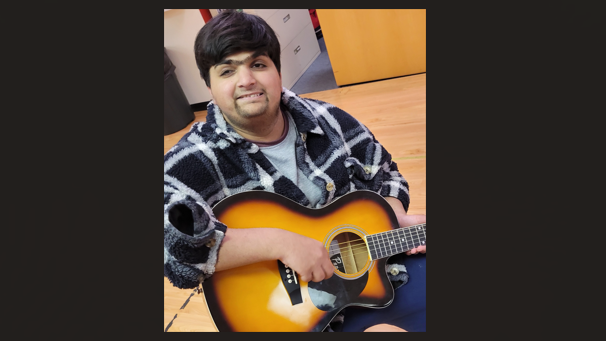
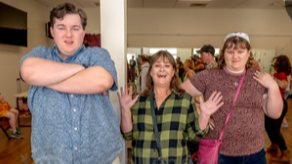
When my son, Saïd, was born, we discovered he had Down syndrome. I was 21 years old at the time, and I hadn’t done prenatal testing because it was considered a “low-risk” pregnancy. Suddenly I found myself sitting in doctors’ offices and hearing professionals describe what they believed his future would look like. “He may never learn to read.” “His learning will likely plateau around age four.” “It’s unlikely he will live an independent life.” Those are frightening things to say to a young mother. Thankfully, I didn’t believe them. Instead, I chose to raise my son with the expectation that he would learn , would grow , and would live as full a life as he was capable of living . And he did. When the College of Adaptive Arts started in 2009, Saïd was 19—just the right age for college. We became part of the CAA community and never left. He took classes, performed in the community, and truly blossomed as a young man. Along the way he discovered that he loves theater. He also loves to sing. Don’t give him a microphone—you may never get it back. 🙂 Today, at 35 years old, Saïd lives with a roommate and a caregiving couple. He has a vibrant, joyful, independent life. And he still loves taking classes every semester. My own journey with CAA has been equally meaningful. For most of those years, I was a parent in the community. I soon joined the Board and became a professor. I taught classes like Speaking with Confidence and Joy of Baking , and eventually stepped into the role of Executive Director. But the belief that first guided me as a young mother has never changed. The belief I had in Saïd’s ability to learn, grow, and build a meaningful life is the same belief I hold for every student who walks through the doors of the College of Adaptive Arts. And something remarkable happens when you lead with that belief. Students rise to meet it. When we expect growth, they grow. When we expect contribution, they contribute. When we expect full lives, they build them. At CAA, we don’t define our students by limitations. We define them by possibility. And every semester, they remind us that possibility is far greater than anyone once imagined. -- Nicole Kim Executive Director College of Adaptive Arts
By DeAnna Pursai February 23, 2026
College of Adaptive Arts is beginning a new weekly blog series featuring a story of a CAA student, professor, or parent/care provider each week. We hope you enjoy and can resonate with these stories. If you could comment and share with your networks to amplify this model, we'd be deeply obliged to you: Angel Ellenberger, sister to CAA Co-Founder DeAnna Ellenberger Pursai, grew up in Bluffton, Indiana alongside DeAnna in the 70's and 80's. It was a glorious childhood, full of love, joy, laughter, and sisterhood bonding. Angel was always quite social, and she was a hit wherever she went with the cheerleaders and the community. DeAnna came home from college one summer when Angel was in a postsecondary program (mandatory 18-22 extended years for students in the special education system). At the time, Angel was actively working with a job coach cleaning the desks at the local high school. DeAnna thought to herself, "Cool! That’s what happens to adults when the special ed students leave the school system." About one year to the date, DeAnna came back home to find Angel more than doubled her size and eating a bag of chips on the couch. She asked what had happened, and their mom said that the funding was cut for the job coach program and that Angel didn’t want to attend the one adult day program shared across their 2 rural counties – the only feeder option once you left the special education system. Angel did indeed end up going to the day program after she gained so much weight that she had congestive heart failure in 2000 and almost passed away. Needless to say, it’s been an arduous and tenuous endeavor. Angel is intelligent, perceptive, social, artistic, creative, and comedic. She needed a support system with more opportunities to socialize, learn, engage beyond coloring in local dime store coloring books for hours. That critical gap that Angel experienced sparked the seed of change, and together with her partner and friend Dr. Pamela Lindsay, College of Adaptive Arts was born. DeAnna and Dr. Pam built the college model they couldn’t find and so many around the world also could not find. To those people searching, CAA's message is, "We hear you, we see you, and we’re coming." CAA will not stop until it has garnered the support, awareness, and public and private levers to scale this lifelong collegiate model worldwide to become as widespread, welcoming, and accessible in the education space that Special Olympics provides so robustly in the sports and athletics space. CAA's revolutionary model is proving everyday that inclusive education is not charity; it is sustainable, transformative and a lifelong right.

Subscribe to our mailing list

Are you a current family looking for Weekly Updates? Sign into the student portal or subscribe to our weekly email list.
Subscribe

Share